
Play your tax cards right with gambling wins and losses
 If you gamble, be sure you understand the tax consequences. Both wins and losses can affect your income tax bill. And changes under the Tax Cuts and Jobs Act (TCJA) could also have an impact.
Wins and taxable income
You must report 100% of your gambling winnings as taxable income. The value of complimentary goodies (“comps”) provided by gambling establishments must also be included in taxable income as winnings.
Winnings are subject to your regular federal income tax rate. You might pay a lower rate on gambling winnings this year because of rate reductions under the TCJA.
Amounts you win may be reported to you on IRS Form W-2G (“Certain Gambling Winnings”). In some cases, federal income tax may be withheld, too. Anytime a Form W-2G is issued, the IRS gets a copy. So if you’ve received such a form, remember that the IRS will expect to see the winnings on your tax return.
Losses and tax deductions
You can write off gambling losses as a miscellaneous itemized deduction. While miscellaneous deductions subject to the 2% of adjusted gross income floor are not allowed for 2018 through 2025 under the TCJA, the deduction for gambling losses isn’t subject to that floor. So gambling losses are still deductible.
But the TCJA’s near doubling of the standard deduction for 2018 (to $24,000 for married couples filing jointly, $18,000 for heads of households and $12,000 for singles and separate filers) means that, even if you typically itemized deductions in the past, you may no longer benefit from itemizing. Itemizing saves tax only when total itemized deductions exceed the applicable standard deduction.
Also be aware that the deduction for gambling losses is limited to your winnings for the year, and any excess losses cannot be carried forward to future years. Also, out-of-pocket expenses for transportation, meals, lodging and so forth can’t be deducted unless you qualify as a gambling professional.
And, for 2018 through 2025, the TCJA modifies the limit on gambling losses for professional gamblers so that all deductions for expenses incurred in carrying out gambling activities, not just losses, are limited to the extent of gambling winnings.
Tracking your activities
To claim a deduction for gambling losses, you must adequately document them, including:
- The date and type of gambling activity.
- The name and address or location of the gambling establishment.
- The names of other persons (if any) present with you at the gambling establishment. (Obviously, this is not possible when the gambling occurs at a public venue such as a casino, race track, or bingo parlor.)
- The amount won or lost.
You can document income and losses from gambling on table games by recording the number of the table you played and keeping statements showing casino credit issued to you. For lotteries, you can use winning statements and unredeemed tickets as documentation.
Please contact us if you have questions or want more information about the tax treatment of gambling wins and losses.
© 2018

 IT consultants are many things — experts in their field, champions of the workaround and, generally, the “people persons” of the tech field. But they’re not magicians who, with the wave of a smartphone, can solve any dilemma you throw at them. Here are six ways to get more value from your company’s next IT consulting relationship:
 The Tax Cuts and Jobs Act (TCJA) liberalized the eligibility rules for using the cash method of accounting, making this method — which is simpler than the accrual method — available to more businesses. Now the IRS has provided procedures a small business taxpayer can use to obtain automatic consent to change its method of accounting under the TCJA. If you have the option to use either accounting method, it pays to consider whether switching methods would be beneficial.
 As a business grows, one of many challenges it faces is identifying a competitive yet manageable compensation structure. After all, offer too little and you likely won’t have much success in hiring. Offer too much and you may compromise cash flow and profitability.
 Converting a traditional IRA to a Roth IRA can provide tax-free growth and tax-free withdrawals in retirement. But what if you convert your traditional IRA — subject to income taxes on all earnings and deductible contributions — and then discover you would have been better off if you hadn’t converted it?
 In an increasingly global economy, keeping a close eye on your supply chain is imperative. Even if your company operates only locally or nationally, your suppliers could be affected by wider economic conditions and developments. So, make sure you’re regularly assessing where weak links in your supply chain may lie.
 There was talk of repealing the individual alternative minimum tax (AMT) as part of last year’s tax reform legislation. A repeal wasn’t included in the final version of the Tax Cuts and Jobs Act (TCJA), but the TCJA will reduce the number of taxpayers subject to the AMT.
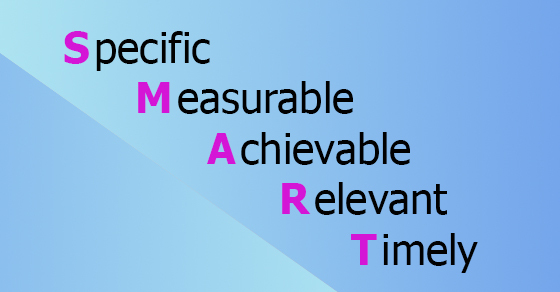 Strategic planning is key to ensuring every company’s long-term viability, and goal setting is an indispensable step toward fulfilling those plans. Unfortunately, businesses often don’t accomplish their overall strategic plans because they’re unable to fully reach the various goals necessary to get there.
 When business use of websites began, getting noticed was the name of the game. Remember pop-up ads? Text scrolling up the screen? How about those mesmerizing rotating banners? Yes, there were — and remain — a variety of comical and some would say annoying ways to get visitors’ attention.
 The Tax Cuts and Jobs Act (TCJA) provides a valuable new tax break to noncorporate owners of pass-through entities: a deduction for a portion of qualified business income (QBI). The deduction generally applies to income from sole proprietorships, partnerships, S corporations and, typically, limited liability companies (LLCs). It can equal as much as 20% of QBI. But once taxable income exceeds $315,000 for married couples filing jointly or $157,500 for other filers, a wage limit begins to phase in.