Following the ABCs of customer assessment
 When a business is launched, its owners typically welcome every customer through the door with a sigh of relief. But after the company has established itself, those same owners might start looking at their buying constituency a little more critically.
If your business has reached this point, regularly assessing your customer base is indeed an important strategic planning activity. One way to approach it is to simply follow the ABCs.
Assign profitability levels
First, pick a time period — perhaps one, three or five years — and calculate the profitability level of each customer or group of customers based on sales numbers and both direct and indirect costs. (We can help you choose the ideal calculations and run the numbers.)
Once you’ve determined the profitability of each customer or group of customers, divide them into three groups:
- The A group consists of highly profitable customers whose business you’d like to expand.
- The B group comprises customers who aren’t extremely profitable, but still positively contribute to your bottom line.
- The C group includes those customers who are dragging down your profitability. These are the customers you can’t afford to keep.
Act accordingly
With the A customers, your objective should be to grow your business relationship with them. Identify what motivates them to buy, so you can continue to meet their needs. Is it something specific about your products or services? Is it your customer service? Developing a good understanding of this group will help you not only build your relationship with these critical customers, but also target marketing efforts to attract other, similar ones.
Category B customers have value but, just by virtue of sitting in the middle, they can slide either way. There’s a good chance that, with the right mix of product and marketing resources, some of them can be turned into A customers. Determine which ones have the most in common with your best customers; then focus your marketing efforts on them and track the results.
When it comes to the C group, spend a nominal amount of time to see whether any of them might move up the ladder. It’s likely, though, that most of your C customers simply aren’t a good fit for your company. Fortunately, firing your least desirable customers won’t require much effort. Simply curtail your marketing and sales efforts, or stop them entirely, and most will wander off on their own.
Cut costs, bring in more
The thought of purposefully losing customers may seem like a sure recipe for disaster. But doing so can help you cut fruitless costs and bring in more revenue from engaged buyers. Our firm can help you review the pertinent financial data and develop a customer strategy that builds your bottom line.
© 2018


 In today’s tightening job market, to attract and retain the best employees, small businesses need to offer not only competitive pay, but also appealing fringe benefits. Benefits that are tax-free are especially attractive to employees. Let’s take a quick look at some popular options.
 It’s easy to understand why more and more businesses are taking a “bring your own device” (BYOD) approach to the smartphones, tablets and laptops many employees rely on to do their jobs. BYOD can boost employee efficiency and satisfaction, often while reducing a company’s IT costs. But the approach isn’t without risk for both you and your staff. So, it’s highly advisable to create a strong formal policy that combines convenience with security.
 If you’re age 70½ or older, you can make direct contributions — up to $100,000 annually — from your IRA to qualified charitable organizations without owing any income tax on the distributions. This break may be especially beneficial now because of Tax Cuts and Jobs Act (TCJA) changes that affect who can benefit from the itemized deduction for charitable donations.
 Like many business owners, you probably created a business plan when you launched your company. But, as is also often the case, you may not have looked at it much since then. Now that fall has arrived and year end is coming soon, why not dig it out? Reviewing and revising a business plan can be a great way to plan for the year ahead.
 For investors, fall is a good time to review year-to-date gains and losses. Not only can it help you assess your financial health, but it also can help you determine whether to buy or sell investments before year end to save taxes. This year, you also need to keep in mind the impact of the Tax Cuts and Jobs Act (TCJA). While the TCJA didn’t change long-term capital gains rates, it did change the tax brackets for long-term capital gains and qualified dividends.
 If you’re charitably inclined and you collect art, appreciated artwork can make one of the best charitable gifts from a tax perspective. In general, donating appreciated property is doubly beneficial because you can both enjoy a valuable tax deduction and avoid the capital gains taxes you’d owe if you sold the property. The extra benefit from donating
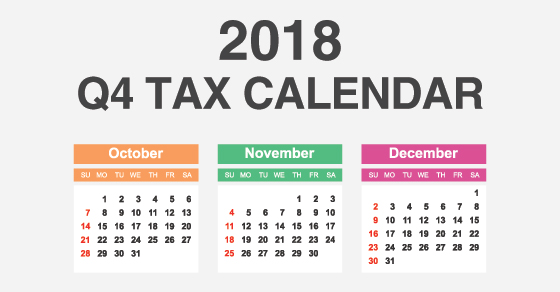 Here are some of the key tax-related deadlines affecting businesses and other employers during the fourth quarter of 2018. Keep in mind that this list isn’t all-inclusive, so there may be additional deadlines that apply to you. Contact us to ensure you’re meeting all applicable deadlines and to learn more about the filing requirements.
 Every business with more than one owner needs a buy-sell agreement to handle both expected and unexpected ownership changes. When creating or updating yours, be sure you’re prepared for the valuation issues that will come into play.